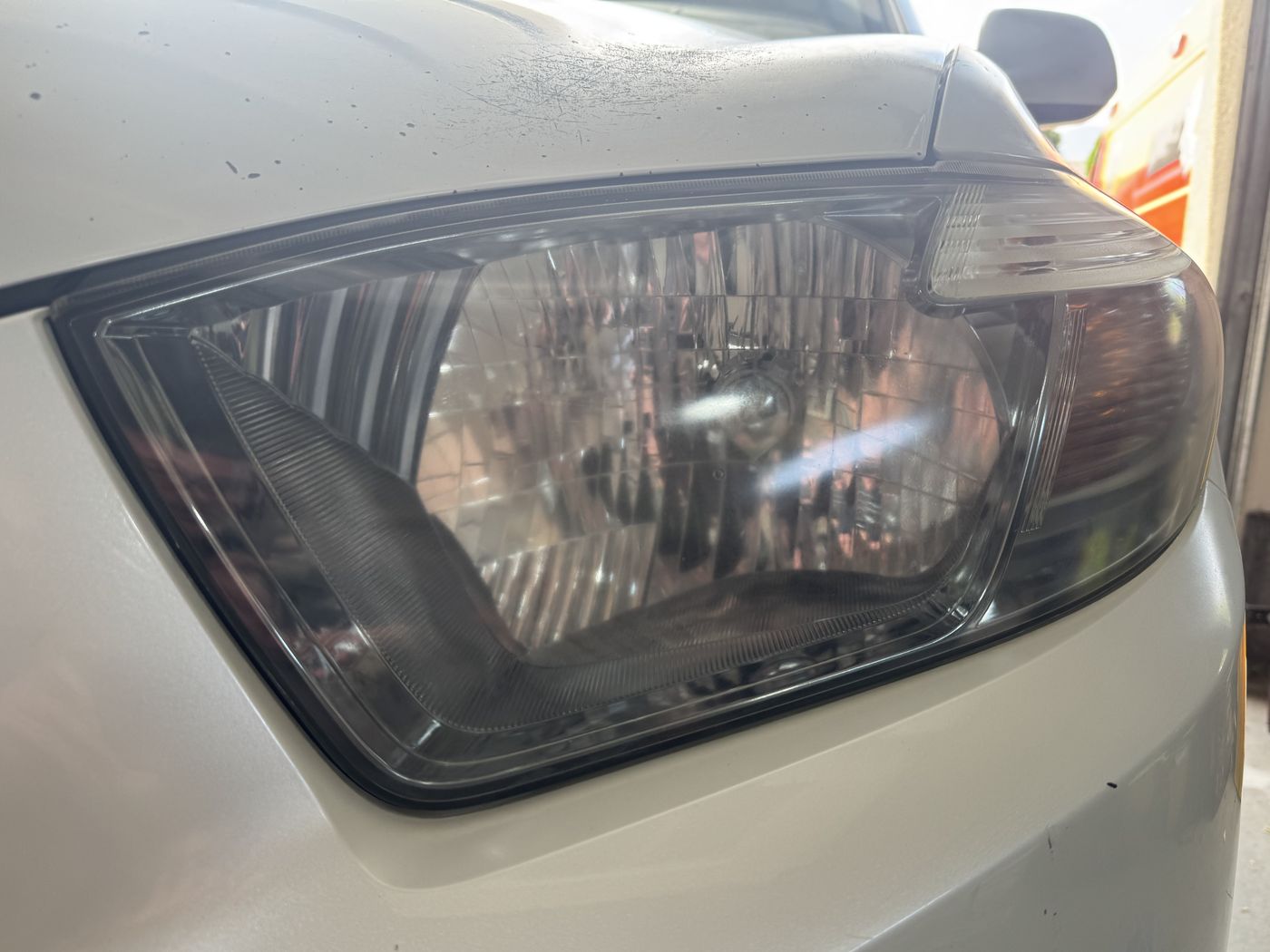
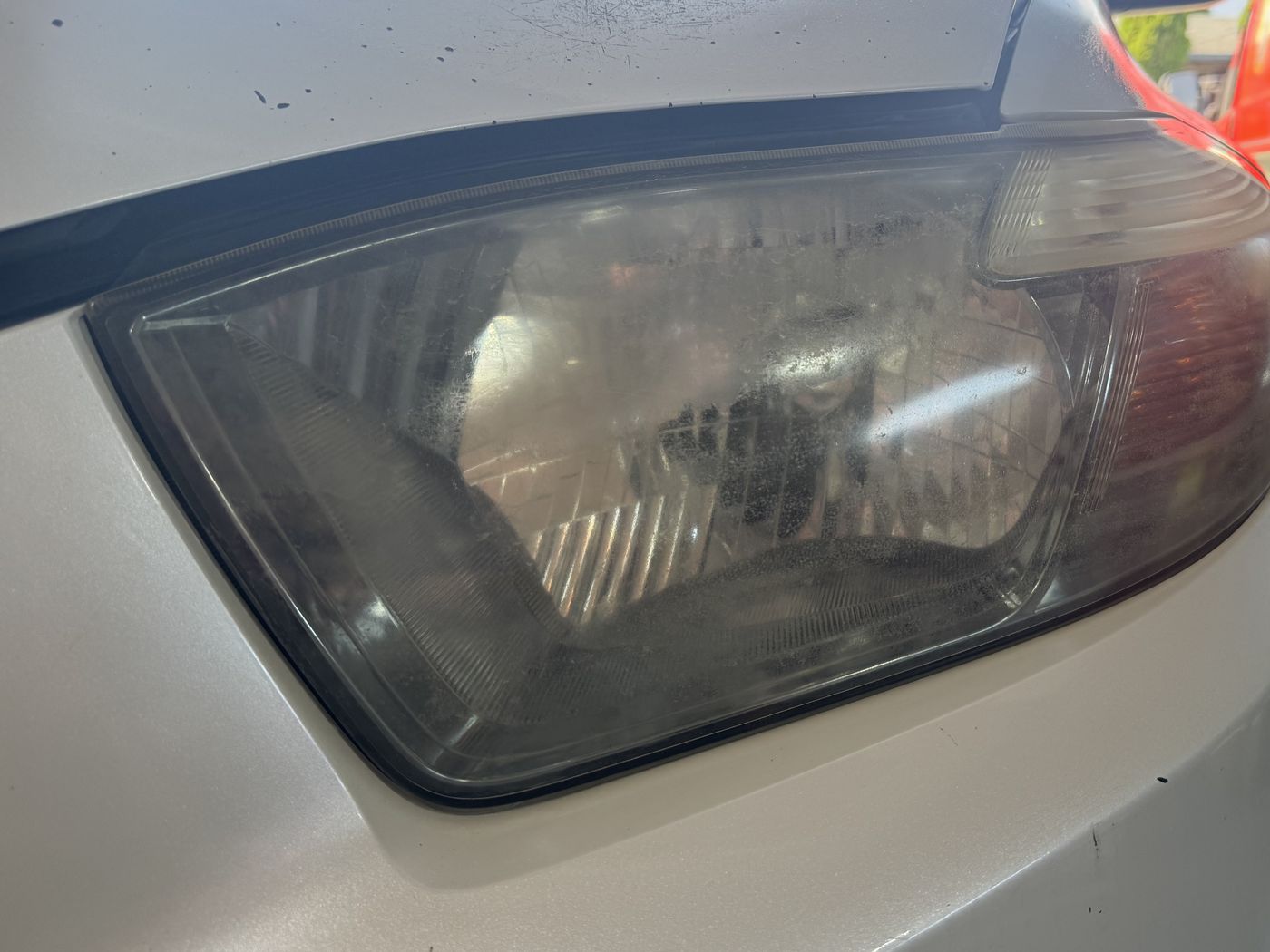
The problems restoration solves
If your lenses look like the 'before' above, this is almost certainly you.
Yellowing & oxidation
The #1 problem. Sanding removes the dead, UV-burned top layer of the lens; polishing restores clarity. This is what restoration is built for.
Cloudy, hazy lenses
That milky film is surface oxidation. It comes off, and the lens looks clear again — with a real improvement in how much light gets through at night.
Dull, faded plastic
Sun-baked, chalky lenses sharpen back up to a glossy, like-new surface once the oxidation is cut and sealed.
Where restoration isn't the answer
We'd rather tell you up front than take a job that won't help.
Moisture inside the lens
Condensation or water inside is a broken seal, not a surface problem. An exterior process can't reach it — we'll tell you if that's what your photos show.
Cracks & internal damage
A cracked lens or damage on the inside of the plastic needs a replacement assembly. Restoration handles haze and oxidation, not structural damage.
A dim bulb or wiring fault
If the bulb or electrical side is the issue, a clearer lens won't fix the output. That's a different repair.
What makes results stick — or fade
The single biggest factor is whether the lens is sealed with a UV coating at the end. A quick buff with polish alone can look great for a few weeks and then haze right back — the polish doesn't protect the bare plastic from the sun that caused the oxidation in the first place. A cured UV coat is what buys you years instead of weeks.
After that, longevity comes down to sun and care: a car parked outside in full Utah sun will haze sooner than one that lives in a garage. Keeping the lenses clean and giving them an occasional light refresh keeps them clear well past the first restoration. It isn't permanent — nothing exposed to that much UV is — but done properly it lasts.